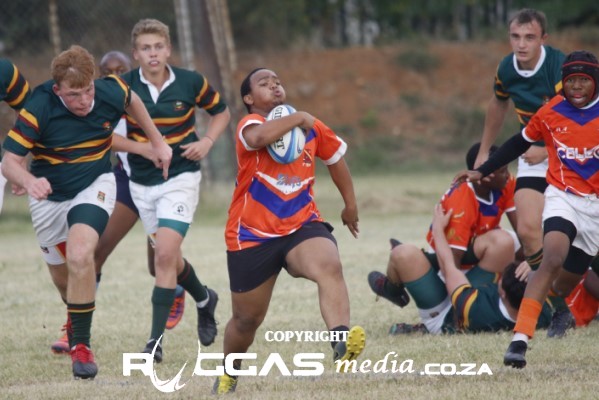
The debate surrounding racial quotas on South African rugby fields remains a highly sensitive and polarising issue. However, the most sustainable solution is not to enforce targets based on race, but to aggressively develop talent based on socioeconomic need.
Because roughly 95% of South Africa's impoverished youth are Black, shifting the focus to under-resourced boys will naturally deliver the equitable representation the country desires. By giving transformation a new, fair, and meritocratic face, SA Rugby can uplift marginalised children while completely neutralising the political friction of the quota system.
The Under-14 Pipeline Strategy
The timeline required to develop a deeply rooted, self-sustaining pool of rugby players from under-resourced backgrounds without relying solely on elite school bursaries is a major point of friction in South African sports policy. Building infrastructure, training coaches, and transforming the sporting culture of thousands of underfunded schools is a monumental task that will take decades. Proponents of the current system argue that until grassroots realities change, administrative targets must remain in place to keep pressure on governing structures.
However, a sustainable, self-funding system that genuinely fosters grassroots talent requires shifting talent identification from a reactive approach at Under-16 and Under-18 levels to a proactive framework starting at the primary school level (Under-12 and Under-13).
Leveraging SA Rugby's Junior High Performance managers to identify talent before high school represents a major strategic shift. Intervening at the primary school level is the most effective way to organically remove the need for quotas through three pillars:
* Nutritional Foundations: A major hurdle for talented children from disadvantaged backgrounds is food security. Placing boys in structured boarding school environments at age 14 ensures they receive a protein-heavy, athlete-appropriate diet during their crucial adolescent growth surges.
* Technical Mastery: Catching players by Under-14 ensures they learn essential technical skills—such as tackling mechanics, spatial awareness, and position-specific micro-skills—before bad habits form. By age 18, these players will have five years of elite-level preparation, making them naturally competitive with any peer.
* Meritocracy by Attrition: If the Under-18 talent pool becomes naturally and overwhelmingly diverse through early intervention, selectors can pick teams strictly on merit without administrative interference. This renders the quota debate obsolete because the quality of the players becomes undeniable.
Infrastructure and the Macro-School Model
To scale this model effectively and accommodate 200 boys per school (roughly 40 boys per grade from Grade 8 to 12), a school must possess massive boarding infrastructure, a high concentration of fields, an existing high-performance gym, and a willingness to upskill community coaches.
Relying solely on the traditional "Top 20" elite rugby schools (such as Paul Roos Gymnasium or Grey College) will not work for this specific model; their current boarding houses are already at capacity with paying students. Instead, the focus must shift to traditional co-educational macro-schools, technical high schools, and prominent regional powerhouses that possess the physical space to expand but require corporate or SA Rugby funding to unlock their full capacity.
Here are 20 strategically positioned high schools across South Africa that fit these exact structural and geographical requirements:
Western Cape & Boland
* 1. HTS Drostdy (Worcester): A massive technical school with extensive boarding facilities and a long history of rugby excellence, perfect for anchoring the Boland region.
* 2. Hoërskool Tygerberg (Parow): Positioned in Cape Town's northern suburbs, offering excellent facilities and easy access for day scholars and boarders from surrounding communities.
* 3. Outeniqua High School (George): The undisputed rugby hub of the South Western Districts (SWD), possessing the infrastructure to manage a massive regional intake.
* 4. Brackenfell High School (Cape Town): A rapidly growing sporting school with the physical space and community links to run a large-scale development program.
Eastern Cape & Border
* 5. Dale College (Qonce): Historically a premier rugby school, currently facing financial constraints. Infusing funding for 200 boys here would revitalise a legendary talent pipeline.
* 6. Queen’s College (Komani): Features massive, historic boarding hostels and world-class fields, ideally located to draw and develop talent from the deep rural Eastern Cape.
* 7. Graeme College (Makhanda): Offers a highly structured, supportive environment with deep roots in Eastern Cape rugby history.
* 8. Hudson Park High School (East London): A co-ed powerhouse that has consistently proven it can develop elite talent and produce Springboks like Lukhanyo Am.
KwaZulu-Natal
* 9. Glenwood High School (Durban): A traditional rugby school with a massive boarding establishment and a highly sophisticated sports science setup.
* 10. Maritzburg College (Pietermaritzburg): One of the largest boarding schools in the country, boasting unmatched field space (including Goldstones) to accommodate multiple teams.
* 11. Durban High School (DHS): Situated in the heart of Durban, DHS has heavily invested in high-performance infrastructure over recent years and is perfectly primed for a large-scale intake.
Gauteng & Golden Lions / Free State
* 12. HTS Louis Botha (Bloemfontein): The alma mater of Ox Nche. It is a technical school built for practical development, though it requires funding to restore its facilities to peak levels.
* 13. Jeppe High School for Boys (Johannesburg): Features a massive, deeply disciplined boarding system and is perfectly located to run community coaching clinics in the greater Johannesburg area.
* 14. King Edward VII School (KES) (Johannesburg): Exceptional historic facilities and an extensive coaching network capable of absorbing and polishing high-potential regional talent.
* 15. Hoërskool Monument (Krugersdorp): A powerhouse on the West Rand with the boarding capacity and competitive structures to test players at the absolute highest level.
* 16. Parktown Boys' High School (Johannesburg): Offers excellent urban infrastructure and a strong tradition of transforming raw talent into competitive athletes.
Noord-Vaal (Pretoria, Limpopo & Mpumalanga)
* 17. HTS Tuine (Pretoria): A technical school in Pretoria with the physical real estate to build a regional high-performance hub for the Blue Bulls region.
* 18. Hoërskool Ben Vorster (Tzaneen): The premier rugby destination in Limpopo, essential for capturing and feeding talent from the northernmost parts of the country.
* 19. HTS Middelburg (Mpumalanga): A massive technical school in the coalfields with top-tier schoolboy facilities, acting as the perfect anchor for the Pumas region.
* 20. Hoërskool Nelspruit (Nelspruit): Possesses great boarding facilities and acts as the central hub for Lowveld rugby development.
The Strict Eligibility Matrix: Socioeconomic Redress
To ensure that this 4,000-player national pipeline is not exploited by affluent families or used to recycle players already attending elite private academies, a strict verification matrix must be embedded into SA Rugby’s operational policy.
Crucially, this framework is socioeconomically determined rather than race-dependent. By anchoring eligibility to poverty indexes, the system targets genuine financial hardship across all demographics, meaning it does not exclude impoverished white boys. This pivot completely neutralises the political toxicity of the traditional quota debate.
1. Socioeconomic Thresholds: Parents or legal guardians must submit verifiable financial documentation proving a gross combined household income below R350,000 per annum (roughly R29,000 per month). To ensure working-class "missing middle" families do not crowd out families living in survival-level poverty, a tiered priority filter is applied. Highest priority is given to SASSA child support grant beneficiaries, followed by households earning under R150,000, before filling the remaining academy capacity with working-class applicants.
2. The Anti-Poaching Quarantine: If a player leaves a designated macro-hub before completing Grade 12 to join a traditional private rugby powerhouse, the receiving school or its associated alumni trust must immediately pay SA Rugby a R250,000 breach fee per year of development received.
Youth Weeks Restructuring: A Progressive Funnel
To ensure this expanded school framework translates into professional readiness, South Africa’s historic Youth Weeks must be entirely restructured. Instead of enforcing a blanket quota across all ages, the provincial ecosystem should function as a progressive development funnel that deliberately looks past pre-selected elite schoolboys:
* Under-13 Craven Week (Quota-Based): Serves as the initial entry point. It introduces young primary school boys of all backgrounds to provincial structures, allowing scouts to identify raw talent early.
* Under-16 Grant Khomo Week (Players from Disadvantaged Communities Only): Acts as the primary development filter. By making this specific tier exclusive to players from under-resourced areas, provincial unions are structurally forced to scout deeply and field maximum numbers, accelerating crucial match experience during key growth years.
* Under-17 Academy Week (Players from Disadvantaged Communities Only): Serves as the final high-performance finishing school. This level polishes technical, position-specific skills and tactical awareness against elite opposition, preparing a massive pool of players for senior rugby.
* Under-18 Craven Week (No Quotas / 100% Merit): The undisputed pinnacle of schoolboy rugby. Because hundreds of players from disadvantaged backgrounds have already received elite provincial backing and game time at the U16 and U17 levels, selection at the premier Craven Week becomes strictly merit-based. The final teams are chosen purely on performance, eliminating the toxic "quota player" stigma.
By shifting from rigid, reactive racial targets to proactive, socioeconomic talent development, SA Rugby can secure the future of the game. Transforming the pipeline ensures that South African rugby remains both universally fair and historically dominant.
(To be continued - How do we fund the proposal?)