
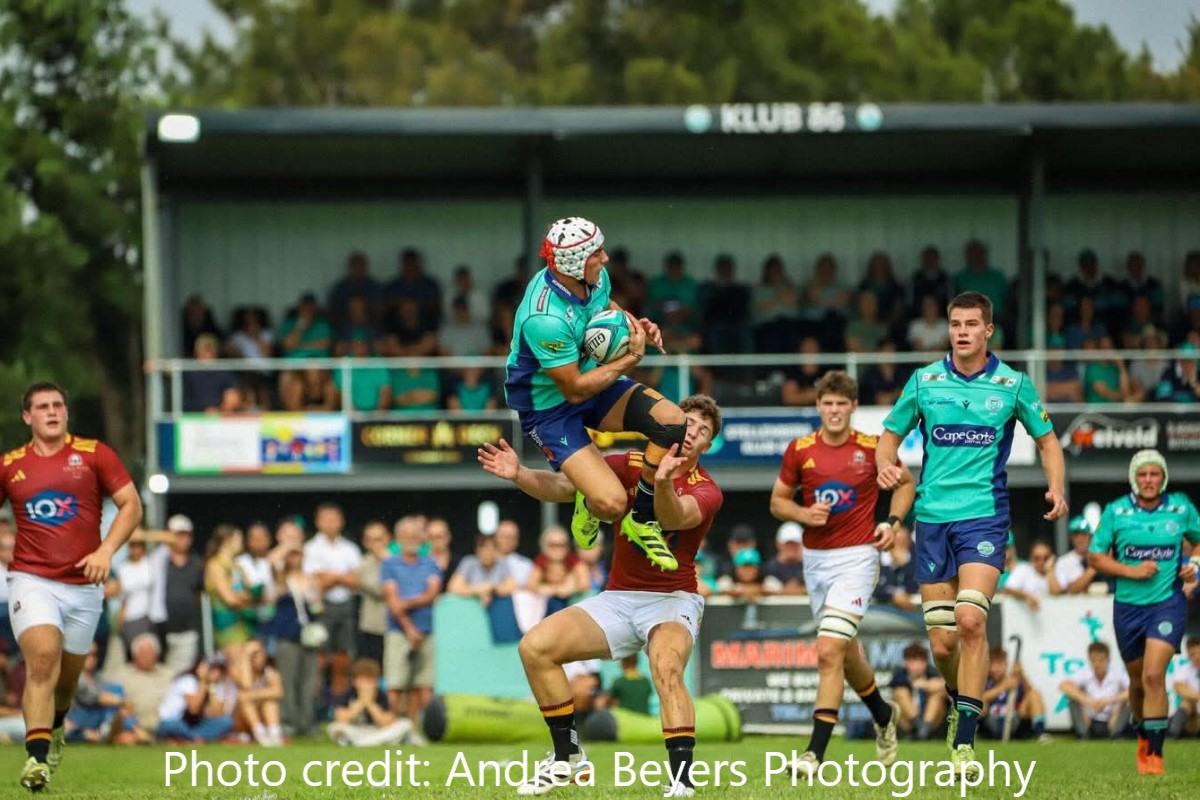
The traditional hierarchy of South African schoolboy rugby is undergoing a structural realignment. For decades, a select group of traditional rugby powerhouses dominated the landscape, leveraging substantial bursary budgets, expansive boarding facilities, and aggressive scouting networks to absorb regional talent.
However, the conclusion of the 2026 domestic season has delivered a definitive verdict: non-traditional, macro-coeducational "common" schools are successfully retaining local talent and challenging the established order.
This shifting power dynamic is most evident in the dramatic conclusion of Gauteng’s premier schoolboy competition, the Virseker Noordvaal Cup, alongside a broader national trend where community-driven models are disrupting historically elite programs.
The final log standings of the 2026 Virseker Noordvaal Cup regular season produced unprecedented administrative and competitive drama, signalling a vulnerability in traditional systems.
Long considered a baseline powerhouse of the competition, Boksburg’s Hoërskool Dr. E.G. Jansen finished bottom of the 2026 premier log. Plagued by disciplinary issues and mid-season player suspensions, their campaign concluded with a heavy 76-05 defeat to Garsfontein, confirming their automatic relegation to the Plate Division for the 2027 season.
Pretoria’s Hoërskool Waterkloof narrowly avoided the same fate. While they historically counted on a continuous influx of top-tier talent, they spent the majority of the 2026 campaign fighting relegation. Under the initial regulatory framework, Waterkloof faced demotion alongside Jansen, though subsequent administrative adjustments ultimately secured their top-flight status by a narrow margin.
Conversely, recently promoted co-educational institutions Hoërskool Rustenburg and Hoërskool Middelburg defied pre-season relegation forecasts. By heavily relying on localised catchment areas and cultivating structured, organic age-group pipelines, both schools comfortably secured their positions in the premier division.
The decentralisation of talent is not confined to the northern provinces. Across South Africa, large suburban co-educational institutions are transforming into national rugby leaders, replacing imported "all-star" recruitment policies with high-performance coaching, community corporate backing, and long-term roster stability.
Transitioning from historical underdogs to the benchmark of the northern region, Garsfontein concluded the league phase at the top of the standings. Entering the playoffs as the top seed, they have demonstrated that co-educational day schools can structurally match the physical and technical output of traditional boys-only institutions.
Also, the Durbanville-based "Jade Brigade" has fundamentally altered the Western Cape rugby landscape. Reaching an unprecedented No. 5 national ranking in August 2026, Stellenberg solidified their status as an elite program with an emphatic 42-12 victory over Hoërskool Durbanville on 1 August, following historic victories over Grey College, Paarl Gimnasium and Paul Roos earlier in the season.
The inverse of this decentralisation is the visible strain on traditional, bursary-dependent boarding school models that fail to protect their local footprint. The most prominent example is Durban’s Glenwood High School.
Once an unyielding force that anchored KwaZulu-Natal rugby and consistently produced international players, Glenwood has suffered a sharp contraction in its rugby program. Escalating financial pressures, aggressive counter-scouting from rival institutions, and an inability to ring-fence local primary school talent have seen the "Green Machine" recede from elite national contention. Their current trajectory serves as a case study: in the modern era of schoolboy sports development, relying solely on historical prestige and heavy recruitment is no longer a sustainable long-term strategy.
As these non-traditional schools celebrate historic milestones, rugby analysts are left debating a critical question: Is the success of these "common" schools a genuine, permanent paradigm shift in South African rugby power, or is it an overstated phenomenon exaggerated by isolated 1st XV golden generations?
To answer this, the landscape must be examined through two distinct lenses:
Sceptics argue that a school’s rugby strength is too often judged solely by the prism of its first team. A macro-school can pull together a highly exceptional, tightly-knit group of 15 to 23 players at the U19 level, backed by a world-class head coach and clever localised conditioning. This creates the illusion of an elite rugby empire.
However, this model is highly susceptible to cyclical dips. When a golden generation matriculates, co-educational schools often experience sharp declines because they lack the institutional safety net found in traditional setups. A true power shift requires structural longevity, not just a three-year peak at the first-team level.
Conversely, the data suggests this shift is structural, not accidental. Historically, elite traditional schools acted as vacuum cleaners, sucking up the top 10% of primary school talent from every corner of the country. Today, the decentralisation of top-tier coaching, the professionalisation of conditioning programs at neighbourhood schools, and parent pushback against distant boarding houses mean elite players are increasingly choosing to stay home.
When schools like Garsfontein, Stellenberg, Rustenburg, and Middelburg consistently ring-fence their local talent pools, they cut off the supply lines that traditional giants rely on. This is a systemic re-routing of the South African schoolboy rugby economy.
If this power shift is to be verified as genuine, it must face the ultimate crucible: the undisputed "Big Five", Afrikaanse Hoër Seunskool (Affies), Grey College, Paarl Gimnasium, Paarl Boys’ High (Boishaai), and Paul Roos Gimnasium. It is here that the boundary between an overstated trend and a real revolution is drawn.
While a "common" school can produce a first team capable of defeating any opponent on a given weekend, its primary operational limitation remains program-wide depth. Traditional boarding institutions operate massive, self-sustaining talent assembly lines extending flawlessly from Under-14 through to Under-19.
Elite boys' schools routinely field between 25 and 30 rugby teams every Saturday morning. Co-educational "common" schools must necessarily divide their male and female athlete pools across multiple premier sports, including rugby, hockey, and netball. Consequently, while their A-teams are lethal, their lower-tier teams (B, C, and D squads) frequently suffer heavy defeats against the relentless, specialised depth of institutions like Affies or Grey College.
The closing fixtures of the winter season highlighted this ongoing developmental chasm.
Although Garsfontein secured the top spot on the Noordvaal log, their cross-town rivals, Affies, continually demonstrated the systemic power of the traditional model. Affies' depth across the junior divisions remains the gold standard in the north, regularly sweeping lower-team fixtures and dominating multi-team festivals.
Stellenberg’s ascent to the national Top 5 is a historic achievement for a co-educational day school. However, when entering the high-attrition environment of fixtures against the Paarl giants, the physical demands and squad depth required to sustain a winning record across all age grades remain incredibly difficult to replicate. Paarl Gim's efficiency in the junior ranks and Paul Roos’ programmatic dominance indicate that the traditional blueprint remains robust.
The modern schoolboy rugby ecosystem has shifted away from absolute centralised monopolies, but it has not completely overthrown them. By professionalising their systems and securing community corporate backing, "common" schools have proven that their rise is more than just a temporary fluke; they have altered the geography of talent in South Africa.
However, to transition from exciting disruptors to true, permanent rulers, these rising programs must solve the logistical challenge of all-age program depth. Until a co-educational day school can travel to Bloemfontein or Paarl and win the majority of the 25 fixtures played across a Saturday morning, the historic institutions will continue to retain true programmatic dominance over South African schoolboy rugby.