
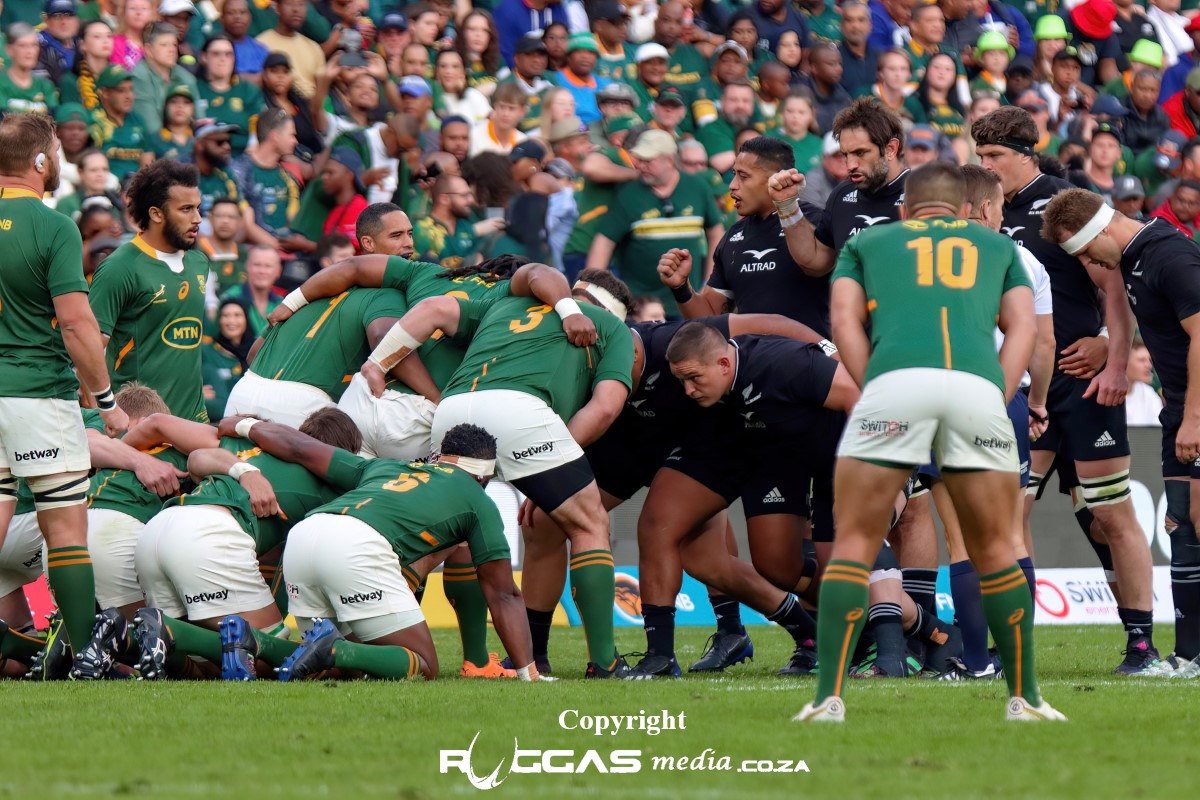
At the World Rugby Shape of the Game summit taking place in London, New Zealand and Australia have reportedly proposed radical changes to "depower" or significantly reduce the frequency of scrums.
The primary goal of these proposals is to increase ball-in-play time and speed up the game by removing time-consuming set-pieces.
According to reports from the French sports daily L'Equipe, these unions are "rallying" to potentially replace certain scrum situations with more dynamic restarts like mauls or free-kicks, drawing accusations from traditionalist factions that they are attempting to move rugby union closer to the style of rugby league.
It is argued by Australia and New Zealand, and echoed by World Rugby, that if the game is to grow in new territories, then a more dynamic style of play is needed, but the French Rugby Federation has countered that it will not be achieved “by imitating rugby league”. Instead, they believe that embracing rugby’s inclusive nature, being a game for all shapes and sizes, will be more effective.
A clear divide has appeared between the "innovators" (New Zealand and Australia) and the "traditionalists." France and South Africa have formed an alliance to defend the scrum as a "powerful symbol" and core value of the sport.
Critics, including former referee Mathieu Raynal, warn that depowering the scrum will lead to "standardised" player body types, potentially eliminating the need for specialist, heavy-set front-row forwards.
While French, National Rugby League president Yann Roubert outlined his fears, saying: "We're open, but we don't want to break what works."
That was a sentiment echoed by French Rugby Federation president Florian Grill. "We are very determined," said Grill. "We believe France has genuine legitimacy given the quality of its professional rugby and its national teams."
These proposals follow recent law trials in Super Rugby Pacific aimed at reducing scrums, such as awarding free-kicks for accidental offsides and protecting the scrum-half at the base of the ruck.
While World Rugby is officially focused on enhancing the game's global appeal and "fan-centric" metrics, the fierce opposition from major unions like SARU and the FFR suggests that a total replacement of scrums with mauls faces significant political hurdles.
Nigel Owens said that the Super Rugby law trial will result in ‘inconsistent’ ref calls and reward ‘negative acts’.
“They also allow players to be concentrated and thus create space, a logical consequence when you have 16 or 18 players in 10 square meters.
“It also allows us to test the players’ physicality, tire them out, and therefore open up the game over time. And in this way, everyone can participate in our sport: the big guys, the tall guys, the short guys, the fast guys… In the long run, the rugby that New Zealand and Australia advocate will homogenise player profiles. We’ll end up with only back-rowers or centres. This will have an impact on the democratisation of our sport.”